Mastering the CC: A Fundamental Breaking Move
Introduction
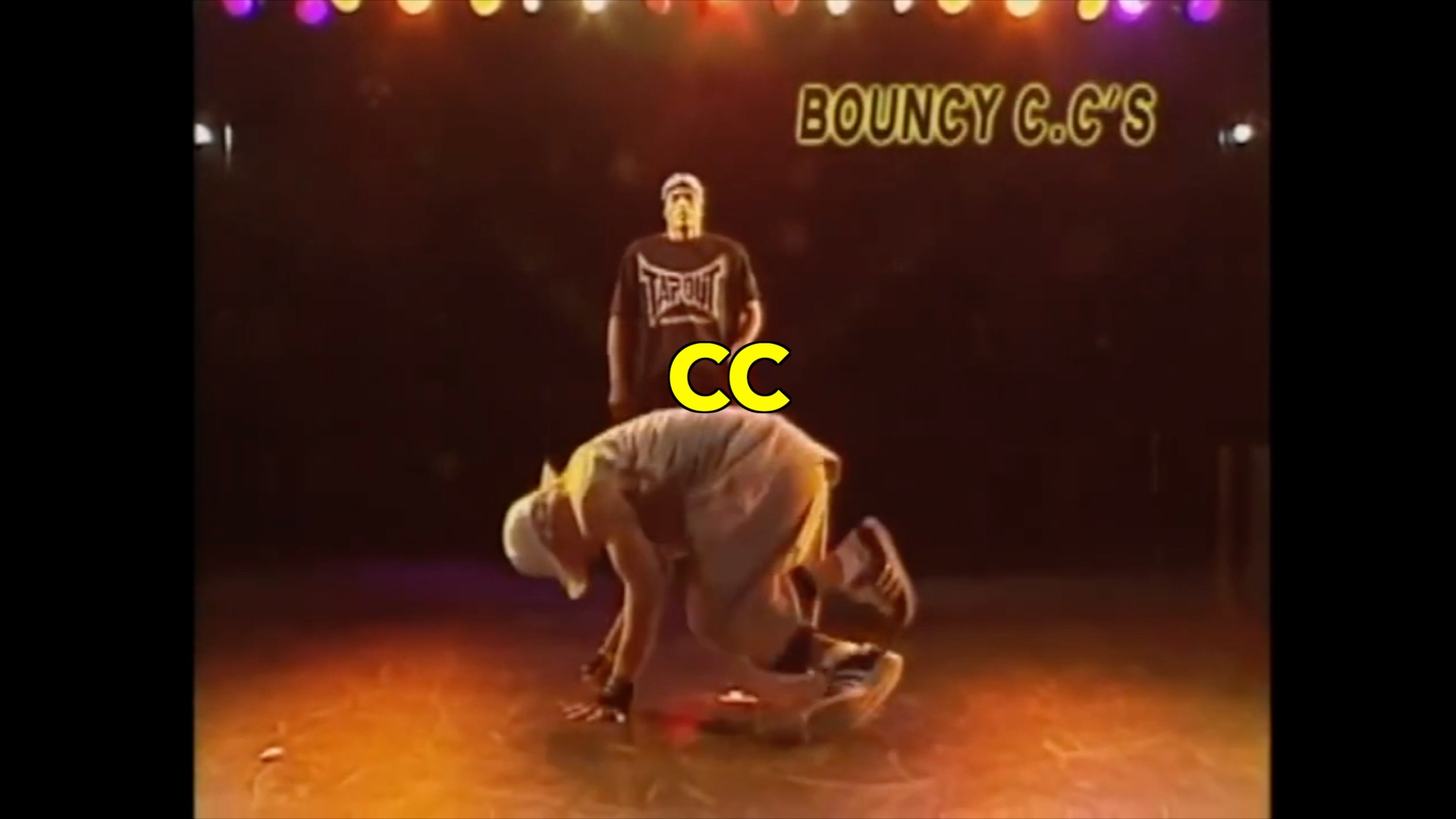
The CC, also known as the Kickout, is a fundamental footwork move in breaking (breakdancing). This dynamic move is essential for any b-boy or b-girl's repertoire, serving as a building block for more complex footwork combinations. The CC involves a fluid motion where the dancer alternates between extending one leg while supporting their body weight on the opposite arm and leg. This move not only showcases a breaker's agility and control but also adds a rhythmic element to their set. Whether you're a beginner looking to build your foundation or an experienced dancer aiming to refine your technique, mastering the CC is crucial for developing a well-rounded breaking style.
Video Demonstration
Dance History
The CC is one of the core footwork moves in breaking, which originated in the 1970s among African American and Puerto Rican youth in New York City. While the exact creator of the CC is not documented, it has been a staple in breaking since the early days of the dance form. The move is part of the downrock element of breaking, which includes floor-based footwork and power moves. As breaking evolved, the CC became an essential technique for dancers to transition between different elements of their routines and to express musicality through quick, precise movements.
Step By Step Instruction
- Start in a squat position with your right arm and right leg extended.
- Place your left hand on the ground for support.
- Kick your left leg up and back, snapping it for a cooler effect.
- As you kick, turn your right foot slightly.
- Return to the starting position.
- To perform the CC on the opposite side, extend your left arm and leg.
- Place your right hand on the ground for support.
- Kick your right leg up and back.
- Return to the starting position.
- Alternate sides, typically prepping on odd counts and kicking on even counts to match the music.
Tips For Learning
- Practice the move slowly at first to build muscle memory and proper form.
- Focus on maintaining balance and control throughout the movement.
- Work on your flexibility to achieve a higher and cleaner kick.
- Pay attention to your arm placement for proper support and weight distribution.
- Practice to the beat of music to develop your timing and rhythm.
- Combine CCs with other footwork moves to create unique combinations.
Conclusion
The CC is a fundamental move in breaking that demonstrates a dancer's control, flexibility, and musicality. By mastering this technique, breakers can enhance their footwork sequences and create more dynamic performances. As with any breaking move, consistent practice and attention to detail are key to perfecting the CC. Remember that breaking is not just about executing moves, but also about expressing yourself and your style through the dance.
More Breaking Dance Moves
If you liked the CC, these moves build on the same floor-level footwork mechanics and single-arm support position it uses:
- Mastering the 6 Step: The Foundation of Breakdancing Footwork — The 6 Step is the foundational pattern that the CC slots into directly — both moves operate from the same low squat and use continuous leg alternation to maintain circular floor movement.
- Mastering the 3 Step: A Breaking Footwork Move for B-Boys & B-Girls — The 3 Step is the other core floor pattern that pairs with the CC in standard downrock combinations, and both moves require the same hip-low, arms-down body position.
- Cutting in Breaking: How to Master This Essential Footwork Move — Cutting is a transitional move that links CC sequences to other footwork patterns, and the two are practiced together to build fluid floor combinations.
- Mastering the 4 Step: A Fundamental Breaking Move — The 4 Step shares the CC's reliance on weight distribution across one arm and two feet, and the two moves are often mixed to create variety in footwork sets.
Learn on your schedule.
The DanceWithCeech academy is coming. Get early access before it opens.
Join the WaitlistTrain 1-on-1 with Ceech.
Get personalized coaching tailored to your style and goals.
Book a Free Consult