Mastering the Art of Waving: A Fluid Funk Style Dance Move
Introduction
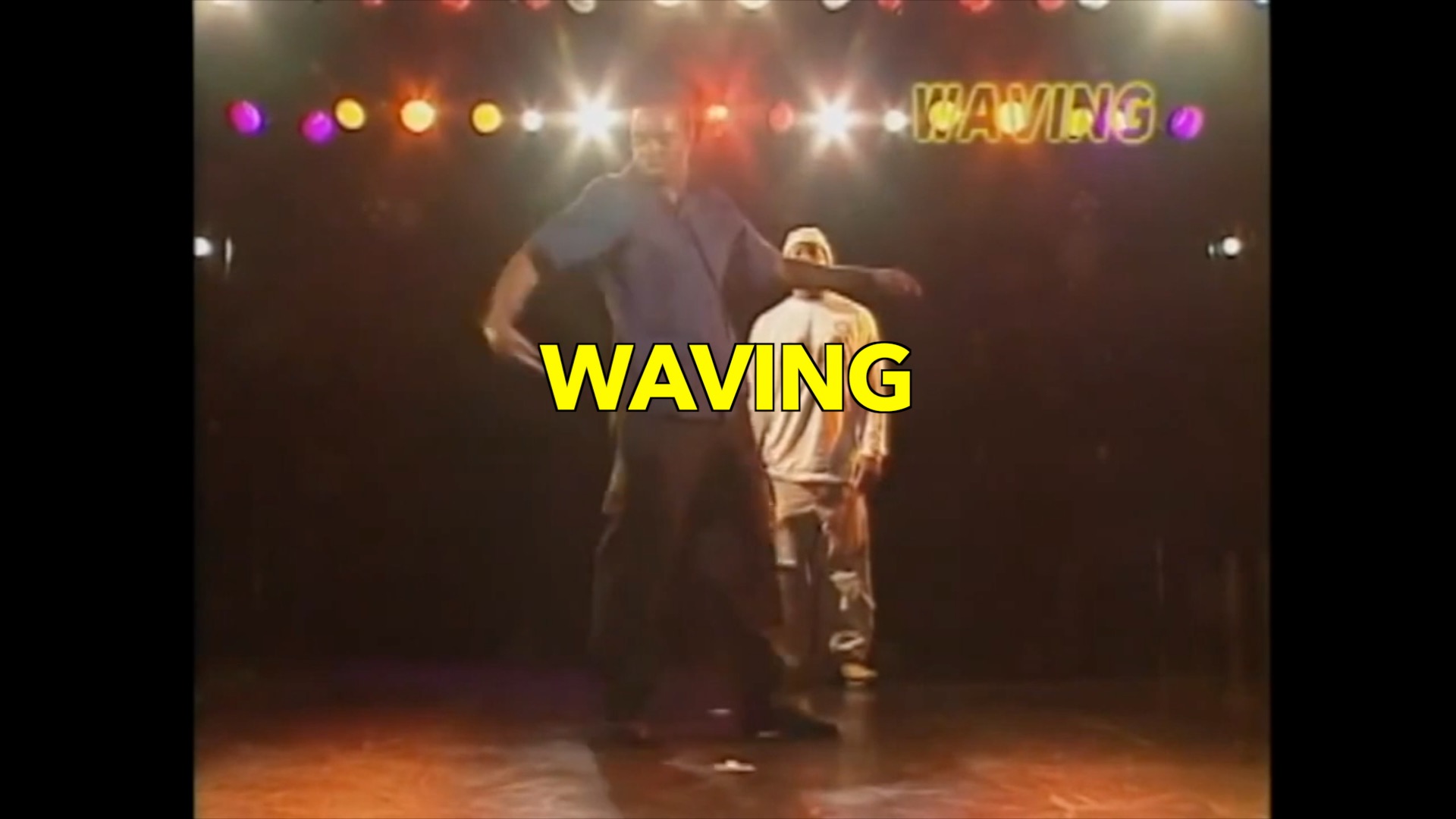
Waving is a mesmerizing dance move that has captivated audiences for decades. This iconic element of funk style dancing creates an illusion of a wave passing through the dancer's body, resulting in a fluid and hypnotic visual effect. Originating from the streets of California, waving has become a cornerstone of various urban dance styles, particularly in popping and animation. The beauty of waving lies in its versatility; it can be performed with arms, hands, legs, or even the entire body, allowing dancers to express their creativity and showcase their control over isolated muscle movements. As a fundamental technique in funk styles, mastering the wave can elevate a dancer's performance, adding a smooth and dynamic quality to their repertoire.
Video Demonstration
Dance History
Waving emerged in the 1970s as part of the broader funk styles dance movement in California. While it's challenging to attribute its creation to a single individual, the move gained significant popularity through pioneering dancers in Fresno and Los Angeles. Boogaloo Sam, founder of the Electric Boogaloos, is often credited with popularizing and refining the technique. The move evolved alongside other funk style elements like popping and locking, becoming an integral part of street dance culture. By the 1980s, waving had spread beyond the West Coast, influencing dancers worldwide and becoming a staple in music videos, movies, and dance competitions.
Step By Step Instruction
- Start with your arm extended to one side, palm facing down.
- Begin by lifting your shoulder slightly.
- Roll your shoulder forward, initiating the wave.
- As the wave moves down your arm, contract your bicep.
- Continue the wave through your elbow, keeping it slightly bent.
- Roll through your forearm, maintaining the fluid motion.
- Finish the wave by flexing your wrist and fingers.
- Practice the reverse motion to complete the wave.
- Once comfortable, try connecting multiple waves in succession.
- Gradually increase speed and incorporate both arms for more complex patterns.
Tips For Learning
- Start slowly, focusing on the isolation of each body part involved in the wave.
- Practice in front of a mirror to visualize the wave effect and improve your technique.
- Use music with a steady beat to help you maintain rhythm and flow.
- Break down the move into smaller segments and perfect each before combining them.
- Experiment with different speeds and directions to add variety to your waves.
- Incorporate waving into your freestyle practice to make it feel more natural.
- Watch videos of experienced dancers to study their technique and style.
- Be patient and consistent in your practice; mastering the wave takes time.
Conclusion
Waving is more than just a dance move; it's a fundamental technique that embodies the essence of funk style dancing. By mastering this fluid and expressive movement, dancers can add a captivating dimension to their performances. Whether you're a beginner or an experienced dancer, dedicating time to perfecting your wave will undoubtedly enhance your overall dance skills and stage presence. Remember, the key to a great wave lies in smooth transitions, body control, and consistent practice.
More Funk Style Dance Moves
If you liked Waving, these moves share the same requirement for sequential body isolation and fluid, illusion-creating movement:
- Mastering the Snaking Move: Fluid Funk Body Control — Snaking is a full-body wave that travels head-to-toe rather than arm-to-arm — the same sequential muscle-release mechanic you practiced for waving, scaled up to the entire body.
- Mastering the Filmore: A Funky Dance Move That Oozes Style — The Filmore blends wave motion through the chest and hips with subtle pops, so your waving technique feeds directly into one of its core components.
- Mastering Popping: The Fundamental Move of Funk Style Dancing — Waving is essentially a chain of controlled muscle contractions — the same fundamental action as a pop — so understanding popping gives you the building block the wave is constructed from.
- Mastering the Art of Tutting: A Geometric Dance Revolution — Tutting is the sharpest possible contrast to waving: hard 90-degree angles vs. flowing curves; training both arm styles makes each one look more deliberate and controlled.
Learn on your schedule.
The DanceWithCeech academy is coming. Get early access before it opens.
Join the WaitlistTrain 1-on-1 with Ceech.
Get personalized coaching tailored to your style and goals.
Book a Free Consult